
Published on July 28, 2026
One hundred comments can look like pure volume. Once organized by intention and sentiment, they tell another story: satisfied customers defending the brand, questions blocking a purchase, sarcasm that a superficial reading could mistake for praise, and complaints that need a fast response.
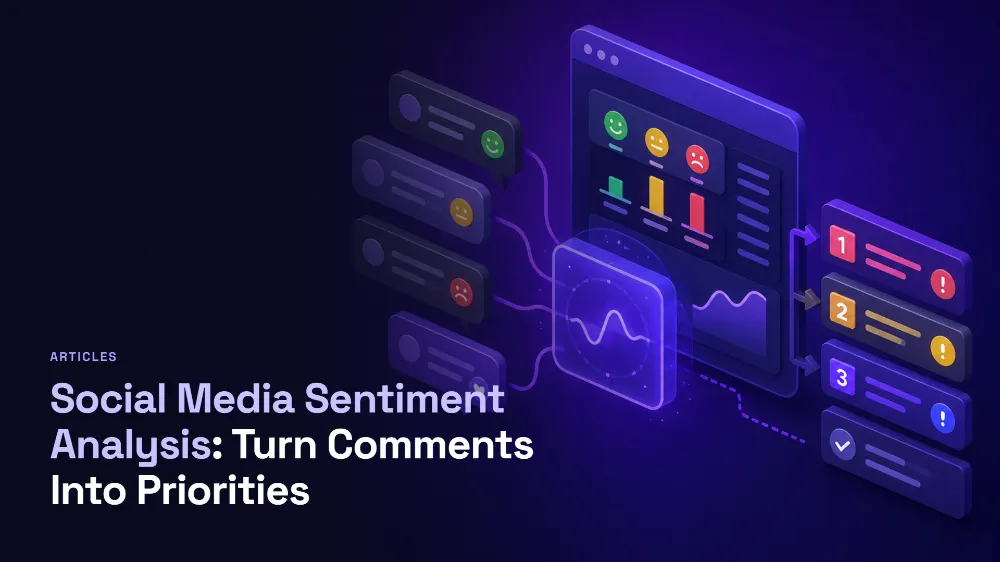
Social media sentiment analysis uses language and context to classify reactions, often as positive, neutral, or negative. Its value is not a colored label on every message. It helps a team decide where to pay attention first.
What can sentiment analysis reveal?
In a social operation, it can show perception shifts after a launch, group complaints by topic, surface praise worth amplifying, and separate factual questions from dissatisfaction. Viewed over time, it can also help compare campaigns and stages of the customer journey.
Sentiment is not the same as intent. “Loved the video, but where is my order?” combines praise and a problem. Mature teams therefore combine automated classification with topic, urgency, history, and human review.
Four practical use cases
- Prioritize support: bring urgent and negative messages to the front of the queue.
- Improve content: discover which topics create enthusiasm, confusion, or resistance.
- Monitor launches: observe how reactions change before, during, and after a campaign.
- Learn customer language: find recurring words in praise, objections, and requests.
The indicator becomes useful when it drives an action. A dashboard full of percentages without owners or response criteria simply rearranges the noise.
Limitations you need to consider
Sarcasm, slang, emojis, short messages, and cultural context can completely alter meaning. A classification also does not prove overall satisfaction; it represents one message in one moment. Use human-reviewed samples to measure errors and refine criteria.
Avoid goals such as “eliminate negative comments.” A healthier objective is to understand causes, respond better, and learn. Silencing criticism or pressuring the classification creates an attractive metric and a worse experience.
Sentiment analysis in Replaier's scope
We are building Replaier's sentiment analysis layer for Creator and Agency. The approved scope includes up to 5,000 analyses per monthly cycle on Creator and 10,000 on Agency. During a trial of either eligible plan, the additional allowance is up to 100 analyses.
This usage is separate from AI comment replies and DMs. The analytics allowance resets monthly and does not use message credits. If it is exhausted, sentiment analysis is blocked on its own; that counter does not end the other capabilities.
Start with a decision, not a chart
Choose an operating question: which complaints need an answer first? Which objection grew after the campaign? What topic creates brand advocates? Then define the messages, time period, and criteria that can answer it.
Sentiment analysis creates value when connected to an organized social inbox, clear owners, and actions. The outcome is not “understanding every emotion.” It is finding signals that volume used to hide.