
Published on July 28, 2026
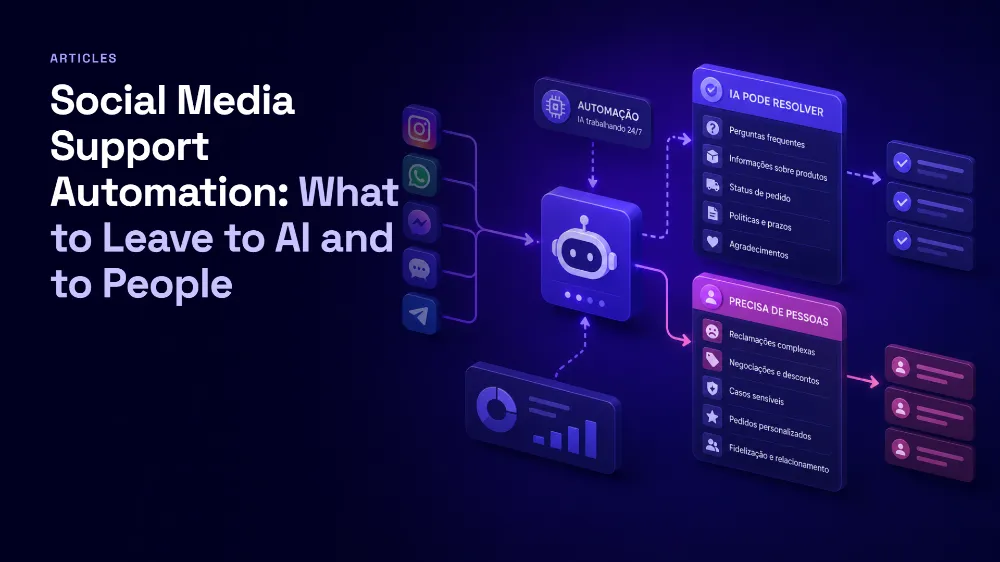
Automating everything looks efficient until the first sensitive complaint arrives. Reviewing everything manually feels safe until a campaign creates hundreds of identical questions. A more sustainable model exists between those extremes: use AI for predictable situations and keep people responsible for decisions that require judgment.
Human-in-the-loop social media automation works best when the division of labor is explicit. The question is not “AI or human?” It is “which part of this conversation can each one handle better?”
What AI can handle safely
Repetitive, low-risk tasks backed by stable information are strong candidates. AI can recognize frequent questions, provide documented guidance, confirm receipt, help sort priority, and route a conversation to the right place.
Even then, it needs an approved knowledge source and boundaries. If a price, stock level, or policy is not documented, the safe response is to ask for help, not improvise.
Start with a narrow category and expand only after reviewed conversations show consistent results.
When a person should take over
- Serious complaints or highly dissatisfied customers.
- Threats, safety risks, and legal topics.
- Requests involving sensitive personal or financial information.
- Negotiations, exceptions, and promises outside documented policy.
- Ambiguous messages where a wrong interpretation could cause meaningful harm.
A handoff is not an admission that technology failed. It makes sure responsibility reaches someone with the context and authority to decide.
How to create a handoff that does not frustrate people
- Acknowledge the situation. Avoid a neutral line after someone has described a serious problem.
- Explain the next step. Say that the conversation is being routed and what the person can expect.
- Preserve history. The team should receive the conversation and details already provided.
- Pause automation. Two voices answering at the same time create confusion.
- Record the reason. Handoffs reveal knowledge gaps and emerging risks.
Human control inside automation
Replaier combines manual and automated comment and DM replies. Its AI Agents include fields for tone, instructions, knowledge, and human handoff signals. The inbox and conversation history help keep both modes in the same context.
When the AI message allowance reaches 100%, automation is blocked, while the inbox, history, and manual sending remain available. The operation does not lose access to conversations simply because automation reached its limit; it can upgrade or use prepaid credits to resume AI sending.
Use errors and handoffs to improve the system
Review a weekly sample of automated replies, conversations handled by people, and cases where a handoff happened too late. Look for patterns rather than someone to blame. A frequent question may expose missing knowledge, while a misclassified complaint may need a more objective signal.
Document three lists: “AI may answer,” “AI must hand off,” and “AI must never claim.” This small operating contract is the best starting point for automation that grows without losing control.